By Karen Price
As teen librarian Abby Fetzner designed the framework for a 10-week folklore program for youth at Erie County Public Library’s Blasco Memorial Library, she expected the stories to serve as a springboard to hands-on activities.
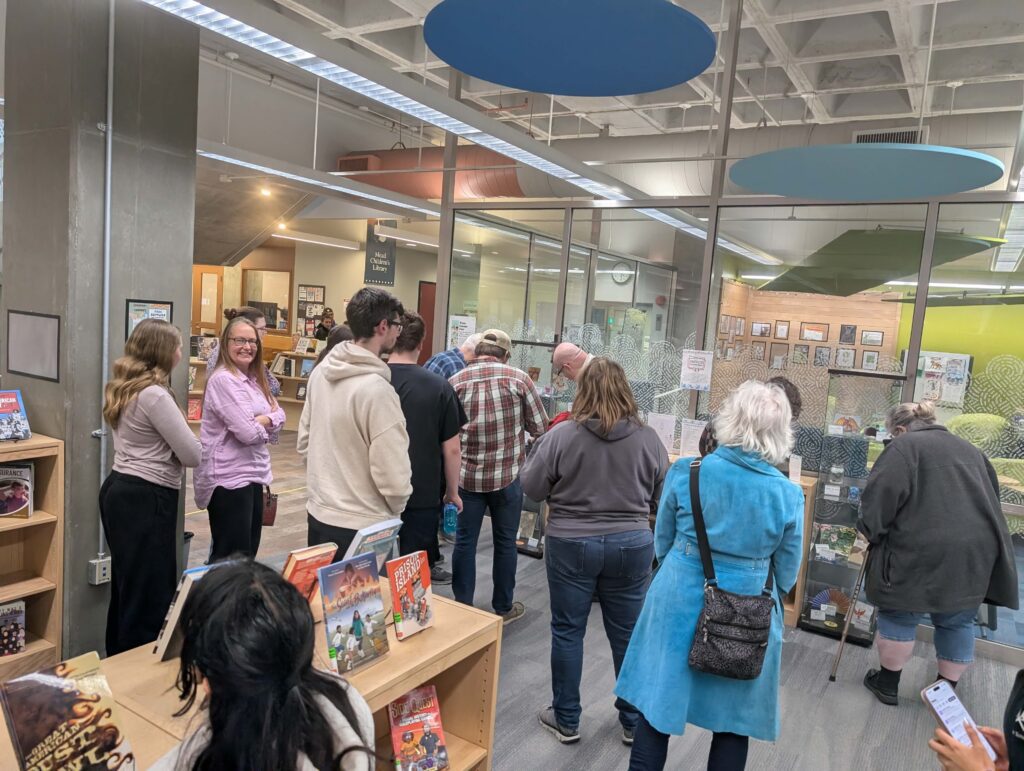
There would be art projects, games, creative writing, guest speakers and, ultimately, a teen-curated Museum of Artifacts showcasing what participants created. What she didn’t expect was how often the teens wanted to linger in the stories themselves.
“I thought they would just want to get to the art, or the games, or whatever, and they were like, ‘No, let’s keep talking about it,’” Fetzner said. “And as time went on, they started making more connections between how this was kind of like the folklore that we learned three weeks ago, and how that culture saw the same kind of concept, and how a lot of cultures had a story to represent the same things.”
“We decided that folklore was stories and beliefs that were passed down through generations. And even a rumor can count as folklore. Or a funny family joke or tradition would count as folklore, by our definition.”
Oliver Hudson, 14
The teens’ folklore exploration at Blasco Memorial Library was supported by PA Humanities’ Youth-Led Humanities program. Initially, Fetzner saw the dive into folklore as a fun way to think more about the stories that make us human and engage teens in humanities practices including critical reflection, dialogue and story-telling. The Museum of Artifacts component would be an opportunity for the teens to become both researchers and creators, transforming tales from around the world into their own forms of creative expression.
They started with a discussion in which the teens came up with their definition of folklore.
Oliver Hudson, 14, said he knew a lot about mythology before joining the group, but very little about folklore.
“We started with all sorts of random stories, things like newspaper articles and folktales and different stuff like that and then categorized what we thought of as folklore and what we didn’t think of as folklore,” he said. “We decided that folklore was stories and beliefs that were passed down through generations. And even a rumor can count as folklore. Or a funny family joke or tradition would count as folklore, by our definition.”
Each week focused on folklore from a different region, ranging from Slavic to Japanese to Egyptian to Greek to local Erie folklore. For the latter, they invited a guest speaker from the Hagen History Center to talk about local folklore, including ghost stories and urban legends from the area.
The more they discussed lore from across the world, the more Hudson realized something they had in common.
“A lot of the stories had a lesson to be learned,” he said. “The majority of ones that counted as folklore were either scaring you away from something, or telling you that you should do something or should not do something. Which I think is why they were passed down, because you want to pass down lessons to younger generations versus just a random collection of stories.”
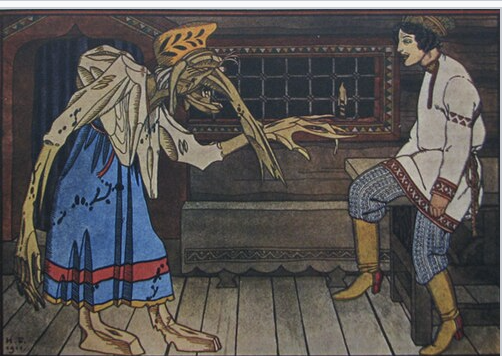
One particularly lively discussion centered around Baba Yaga, a witch-like character from Slavic folklore who may roast and eat the unsuspecting child who wanders off, or may assist the hero who passes her tests or shows strength of character, depending on the story.
“She was actually associated with a lot of different myths we talked about because she was a morally gray character,” Hudson said. “But a lot of things about responsibilities and caring for others were associated with Baba Yaga. She would reward those who helped others and harm those who didn’t.”
The teens held a “trial” to determine whether Baba Yaga was truly evil or just misunderstood, with some arguing the different points and others serving as jury.
“I said that she was a bit misunderstood, because although in many myths she is the one harming the main character, the main character is rarely a good guy,” Hudson said.
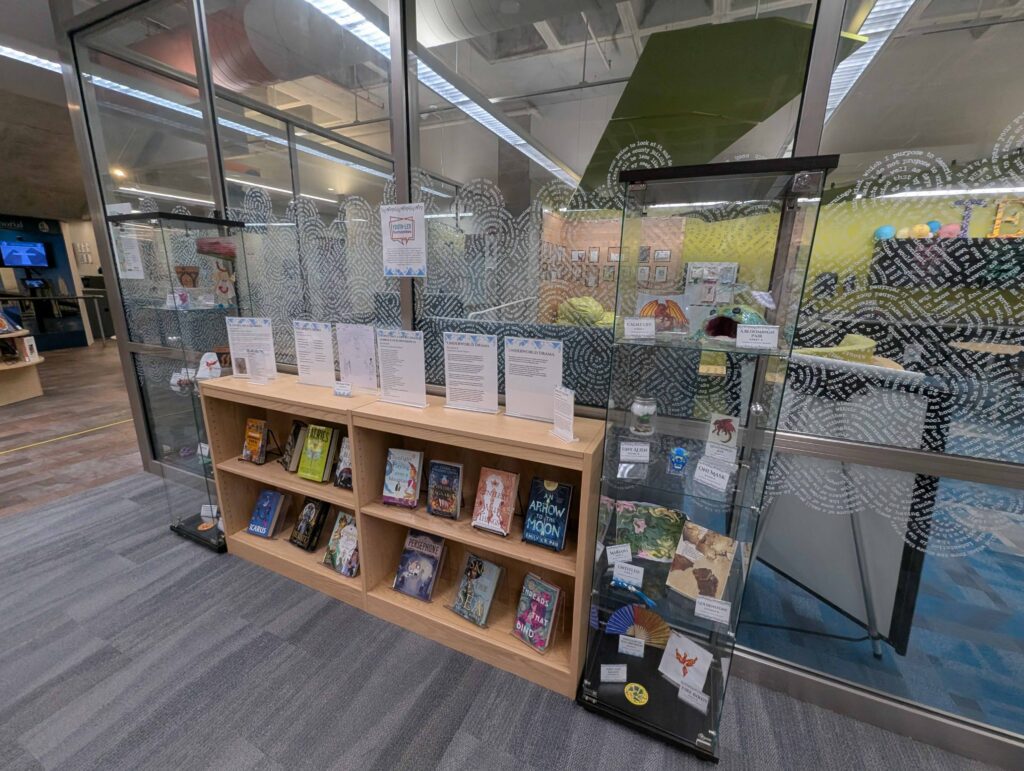
At the end of every session, the teens had a choice for creative expression. When it came time to choose which pieces they wanted to include in the Museum of Artifacts, they took a trip to the Hagen History Center and learned elements of display including placement and information to include in their exhibit. The students shared their sculpture and other 3D creations, paintings and artwork and creative writing, which some chose to read at the exhibit’s opening.
Eleven teens participated in the folklore program, and because of the amount of engagement and interest, Fetzner created a monthly Mythology Guild to continue the exploration and conversation.
Hudson said he learned “all sorts of new stuff” over the course of the 10-week program.
“I thought I was knowledgeable about mythology, and I still think I am, but I learned a whole new depth of different things,” he said. “I’ve looked up and researched various little side tangents because, like Baba Yaga, the only things I learned about here were (at the library), so I’ve actually looked up various other myths about her. It’s kind of fun to learn about things that originally were something I signed up for, and now they’re just things I’m interested in.”

This project is made possible by Library Services and Technology Act (LSTA) Funds from the U.S. Institute of Museum and Library Services administered by the Pennsylvania Department of Education, Office of Commonwealth Libraries; by support from the J.D. Charitable Trust, the Caroline Fredericka Holdship Charitable Trust, and the Amelia Miles Foundation; and with additional support from the National Endowment for the Humanities, individual donors, and other funders.
Help keep the humanities strong
Your support is vital right now because PA Humanities’ funding from the National Endowment for the Humanities does not include $1 million that Congress intended for us to receive this year. As we continue to accomplish great things, support from our community matters more than ever. Your gift helps PA Humanities continue programs such as Youth-Led Humanities that strengthen communities, support young people, and share Pennsylvanians’ stories across the Commonwealth. Make your gift today.
![[color - dark bg] PA SHARP FINAL FILES DB 72dpi](https://pahumanities.org/uploads/files/elementor/thumbs/color-dark-bg-PA-SHARP-FINAL-FILES-DB-72dpi-phgl7aimtfdpzt2rscvl43ksfv3asbbls19lsvuacw.jpg "[color – dark bg] PA SHARP FINAL FILES DB 72dpi")