
By Karen Price
Teenagers today have no shortage of demands on their time, or thoughts about how they want to spend it.
School, jobs, family, extracurriculars, social lives and an endless stream of digital distractions all compete for their attention. So what does it look like to create humanities-based programming that teens don’t just attend, but actually help shape and keep coming back to?
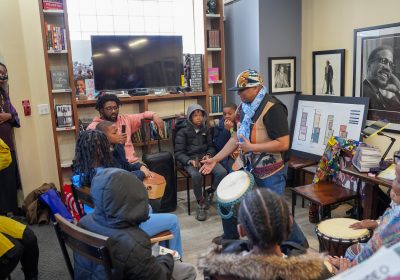
That question is at the heart of Youth-Led Humanities, one of PA Humanities’ core programs. Now in its second year, the current cohort of 20 libraries and afterschool organizations across Pennsylvania is partnering with teens to explore big ideas through the humanities on teens’ own terms. This year’s projects range from folklore and cultural traditions to teen-led writing groups, podcasts, and explorations around mental health, democracy, social movements, and the stories we carry through food, art and shared history.
But Youth-Led Humanities isn’t just about what teens explore, but also how. The program is built on the belief that young people are not passive participants, but thoughtful, curious leaders whose voices deserve to guide the work. When teens are given choice, agency, and respect, engagement deepens, and the humanities come alive.
We recently spoke with Julia Katz, PA Humanities’ Education Program Manager, about what it means to be youth-led, why this approach works, and how Youth-Led Humanities—and new training opportunities for libraries and youth-serving organizations—are helping adults think about how they partner with young people. What follows is a conversation about listening, trust, creativity, and what happens when we make space for teens to lead the way.
Q: Let’s start off with what we mean by engaging youth through the humanities. How does that happen?
JK: One strong example of engaging youth through the humanities is our Teen Reading Lounge program, which was the foundation on which Youth-Led Humanities is built. What makes it an engaging program is that youth have a lot of say and autonomy in choosing the books and content that interests them.
The humanities component is really about sites and facilitators finding ways to help youth think about the human experience, reflect on their own experiences, and learn about the lives of people who are different from them.
That can happen through a book club—a nontraditional book club like Teen Reading Lounge—but also through different kinds of arts used as jumping-off points to dive deeper into reflection and discussion, like theater, or radio, that help youth engage with and learn about other people’s stories and share their own.
Q: What happens when youth are given this choice? Why does that work, and why does giving teens that opportunity to decide what they read and explore make engagement stronger?
JK: We worked with Dr. Valerie Adams-Bass, who created a research study based on 10 years of Teen Reading Lounge. She found there were key factors that made it a high-quality program and contributed to youth engagement. One of the biggest was youth agency and youth voice.
When young people feel respected as humans they have a stake in what they’re doing. When programming is led by their interests and passions they’re more likely to show up and keep showing up. When they help shape the program they feel ownership over it.
Q: How did the Youth-Led Humanities program evolve out of Teen Reading Lounge?
JK: It came about because, while Teen Reading Lounge does have a written curriculum developed at PA Humanities with scholars and educators, it was never meant to be cookie-cutter. Over time, as it expanded to more sites, we saw so many different approaches that engaged the same core tenets of what makes it a good program, but through all kinds of modalities beyond book clubs or reading.
That inspired me to see what else libraries and out-of-school-time programs wanted to do with young people through the humanities. There are also a lot of organizations doing incredible youth-led programming that weren’t tapping into the humanities in intentional ways. The grant helps support them in integrating the humanities into what they’re already doing around youth engagement and leadership.

Q: So if I’m a librarian or part of an out-of-school-time organization reading this and haven’t thought much about being youth-led, why should I? What impacts come from that, beyond just getting more people in the room?
JK: Attendance is a real challenge, and youth-led programming helps with that. Word of mouth spreads more easily when teens are proud of what they’re doing and want to share it with peers.
It also takes pressure off adults. Librarians, especially, don’t always see themselves as educators. Youth-led programs allow adults to welcome teens’ expertise and be on a learning journey alongside them.
There’s also something powerful about adolescents. They’re incredibly creative, brave, and justice-oriented. Letting them explore the stories and issues that matter to them helps inspire them to make change in their communities.
Q: When you look back over the years, what are some of the stories that stand out about the impact on teens?
JK: I’m always moved by the work teens choose to do to support other teens. One of the hardest parts of adolescence is finding a sense of belonging, and many young people struggle with mental health and isolation, especially now.
I love projects where teens receive training to support their own and their peers’ mental health and share resources. We’ve also seen many LGBTQ+ teens drawn to youth-led humanities programming as a safe space in communities where they might not feel they fit in. Librarians have been incredible allies in creating that space.
And teens choose heavy topics, too. It reminds adults that young people are aware of what’s happening in the world and can handle difficult conversations when they’re facilitated in age-appropriate ways. I remember a group wanting to learn about child trafficking and do advocacy around it. Young people can be deeply invested in these issues.
“When young people feel respected as humans they have a stake in what they’re doing. When programming is led by their interests and passions they’re more likely to show up and keep showing up.”
— Julia Katz, PA Humanities education program manager
Q: How does Youth-Led Humanities address the challenge that sometimes these conversations can include or turn to topics that are difficult even for adults to navigate?
JK: Often what shuts down learning and dialogue is adults. That’s why our professional development focuses on helping adults feel confident as facilitators—not experts—who can hold space, ask good questions, and learn alongside youth.
One thing we encourage is having more than one leader, having co-facilitation. That builds continuity and mentorship. In our community of practice, we help adults reflect on their own biases, fears, and power, so they don’t put that onto teens.
We also focus a lot on inquiry and asking good questions. Humanities-based learning doesn’t have to be a lecture. It’s about knowing how to pose thoughtful prompts. For example, if you’re cooking with youth, you can ask what stories they associate with food, what it says about culture or family. Peer learning among facilitators is also huge.
Q: So if a library wants to start youth-led programming, what should they do first?
JK: They should start by talking to young people in their community and asking about interests and needs. Too often, adults design programs without ever consulting teens, then wonder why no one shows up.
That could mean a one-off workshop, a survey, or forming a youth committee. Many long-term partner libraries started with youth advisory councils, which helped build an engaged audience from the start.
Q: PA Humanities also has a youth advisory council for this program, for that very reason. Can you talk a little more about that?
JK: The intention is to live the spirit of youth-led humanities—nothing about youth without youth. We don’t want to make decisions that affect young people without having them at the table.
We piloted it a couple years ago and faced some challenges, but this year we’re really excited. We’re launching officially, with strong interest, and working with an evaluator to do a youth-led evaluation project. It feels like it’s finally coming together.
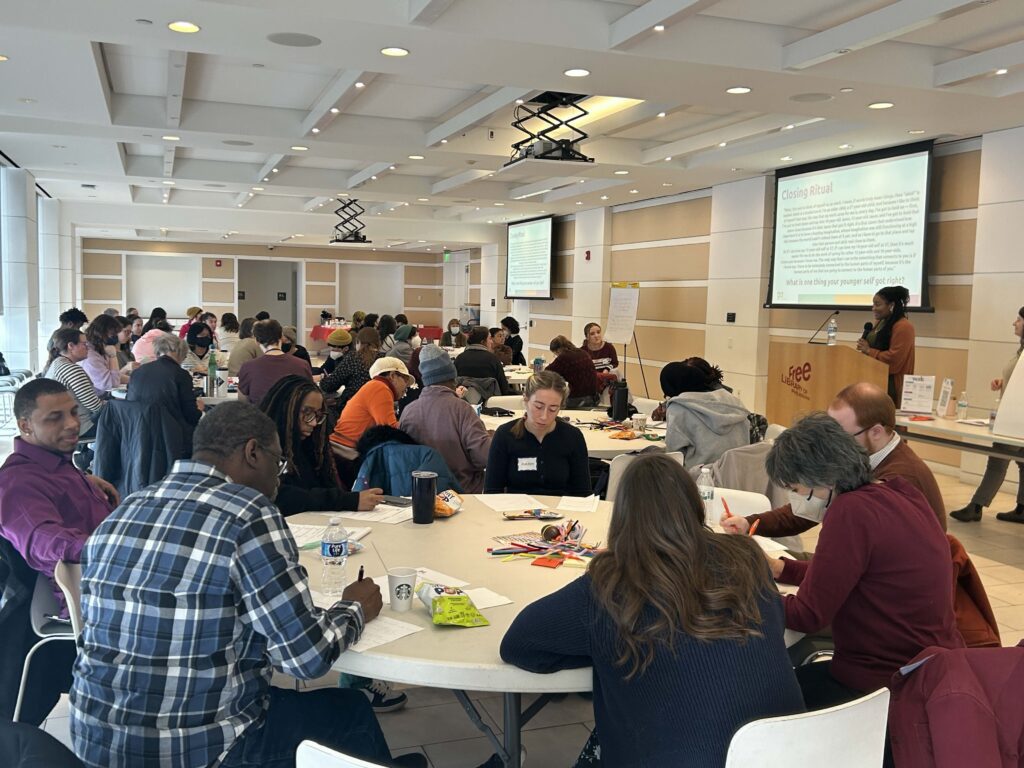
Q: PA Humanities is also now offering trainings to libraries and out-of-school-time sites that would like to learn more about being youth-led without becoming an official part of the Youth-Led Humanities cohort. Can you share more about that?
JK: We’ve developed a lot of training curricula over the years. The umbrella is creating youth-centered or youth-led spaces. That includes trauma-informed and healing-centered practices, care-centered culture, understanding bias, power, and privilege, and integrating the humanities into youth programming, especially around America’s 250th and themes like democracy and freedom.
Q: If someone’s interested in bringing this training to their organization, can they just reach out to you?
JK: Yes. It’s always collaborative. We listen first, then propose and co-create something that fits their needs.
Q: To wrap up, what feedback stands out from long-term Teen Reading Lounge and Youth-Led Humanities partners?
JK: What I hear most from youth is about relationships. Having a trusted adult and a space where they feel they belong is the biggest impact. Teens ask for the program to come back every year, and they keep showing up. That says everything.
To learn more about Youth-Led Humanities or bringing youth-led training to your organization, contact Julia Katz (jkatz@pahumanities.org) or Jen Danifo (jdanifo@pahumanities.org).
![[color - dark bg] PA SHARP FINAL FILES DB 72dpi](https://pahumanities.org/uploads/files/elementor/thumbs/color-dark-bg-PA-SHARP-FINAL-FILES-DB-72dpi-phgl7aimtfdpzt2rscvl43ksfv3asbbls19lsvuacw.jpg "[color – dark bg] PA SHARP FINAL FILES DB 72dpi")