By Karen Price
Ken Burkett, of the Jefferson County History Center, crouches in a darkened passageway just wide enough for one person, with brick walls that slope away on either side and pipes running close overhead.
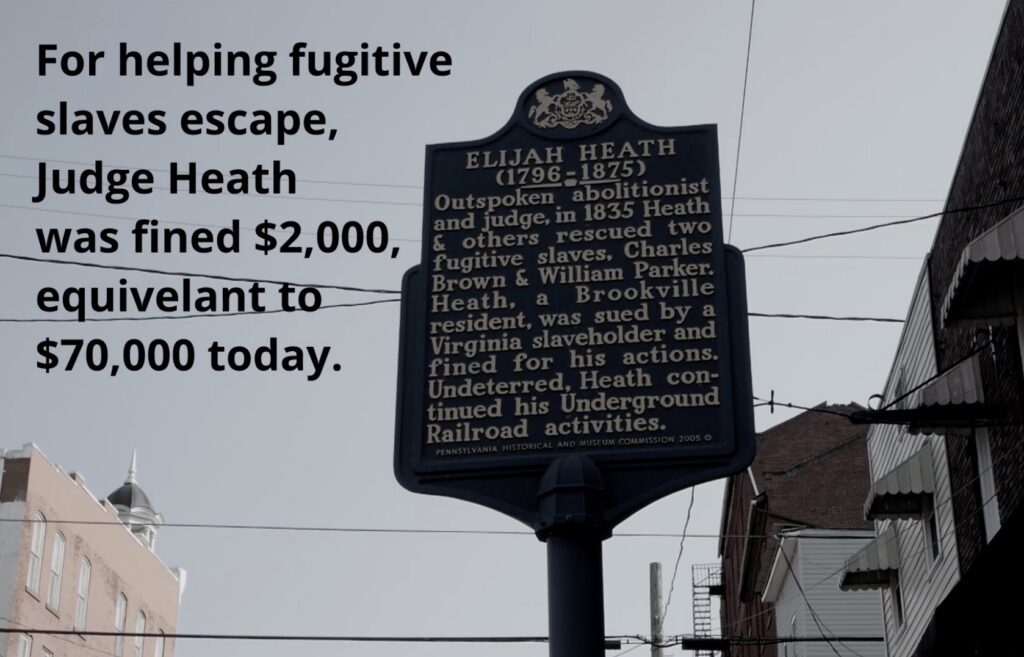
For a time it was believed, he explains in the video produced by the History Center, that this was once a part of the Underground Railroad in the rural northwestern Pennsylvania town of Brookville, discovered during a remodeling project in 1910. While that turned out not to be the case, a well-known member of the community named Elijah Heath, who once owned the home, was an outspoken abolitionist who was involved in the Underground Railroad. They share Heath’s story as one of the History Center’s many videos now available on their YouTube Channel, made possible in part by a PA Humanities’ Wingspan grant.
“We wanted to conduct community storytelling and interviews, and we could not have done it without that grant,” Jefferson County History Center executive director Kat Lyons said. “It’s been a wonderful journey, and we’re not stopping.”
In 2023, PA Humanities awarded Wingspan grants to 24 organizations across the state, offering two years of substantial financial support as well as a robust community of practice network designed to help them grow and “spread their wings.” Grantees used the funding in ways that benefitted them most — from sustaining core operations and strengthening staff capacity to expanding programming and reaching new audiences.
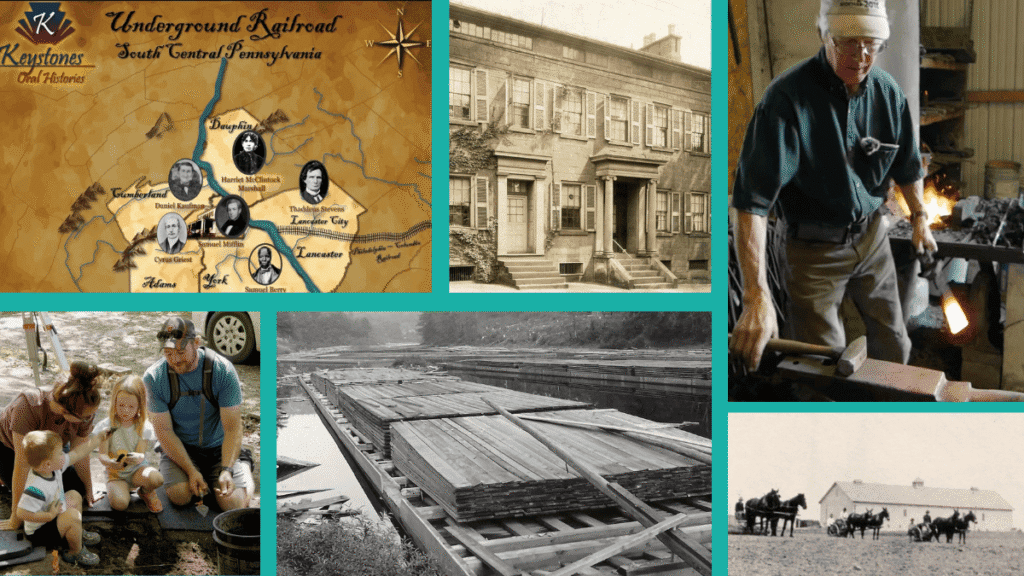
Two who focused on story telling and sharing voices too often missing from the historical record are the Jefferson County History Center and Keystones Oral Histories. From documentaries exploring the Underground Railroad in south central and northwestern Pennsylvania to award-winning films uncovering the community’s industrial and agricultural past, Wingspan funding has given these historians and storytellers the flexibility to research, film, teach, and share their work in meaningful ways. The result is history that feels personal, connected, and alive.
Bryan Wade is the founder of Keystones Oral Histories, based in New Cumberland just outside Harrisburg. He’s a former educator with a passion for examining the human condition and telling the stories of ethnic minorities on a local, county and regional level. He once hosted a television show on public access television, and his documentary films chronicled African Americans from Dauphin and York Counties who served in the military from the Civil War through the Vietnam War. The grant from PA Humanities allowed him to not only complete a documentary on the Underground Railroad and abolitionists in south central Pennsylvania but also produce a teacher’s guide for classroom use.
“City schools are underbudgeted, and the primary focus is on math, reading and writing because of state testing,” Wade said. “History is a complementary subject. Some attention is paid to it, but not so much to local history where people can see their families or see themselves. And research shows that when students can see themselves from an ethnic perspective, that enhances their interest in something, and they pay more attention and want to learn.”
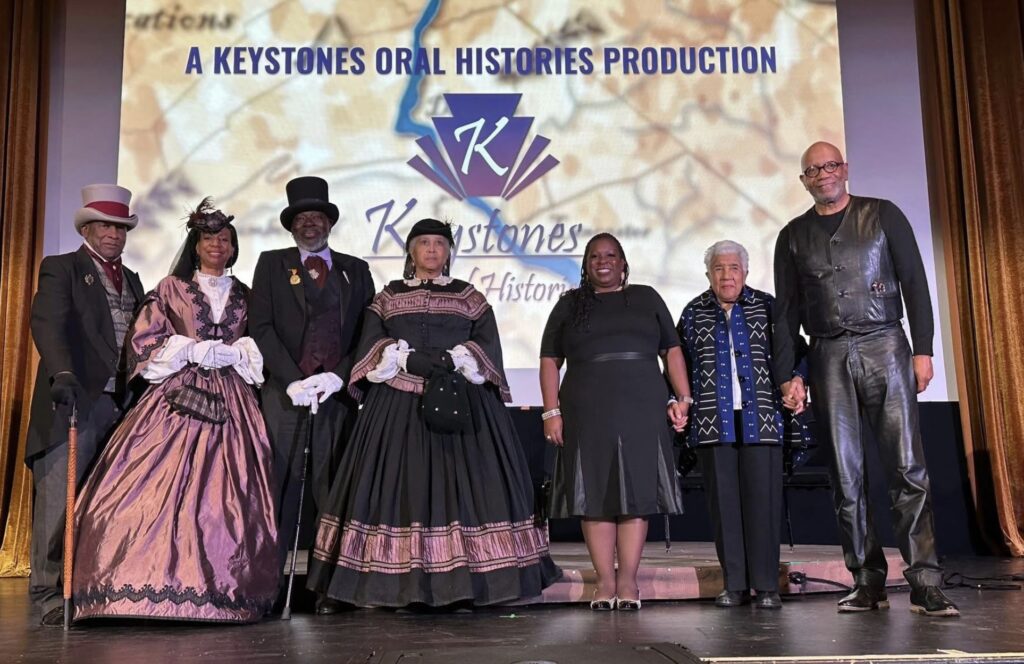
Wade said that as far as he knows, no one had done an exploration of the Underground Railroad across the five counties on which he focused. The main reason he wanted to make the film, he said, was to show how Blacks and whites worked together, defying the Fugitive Slave Law at their own peril, in order to help people escaping slavery successfully continue their journey through Pennsylvania.
“At a lot of the screenings I’ve done you can sense that energy,” Wade said. “People will say, “I learned so much,’ but it also brings a lot of the historians in each county together and they can see how the dots connected to one another. This film brought it to life. People could see it, hear it, then talk about it.”
Wade said the funding from PA Humanities was critical for Keystones Oral Histories because it allowed him to make a living while he spent time on the research and making of the film to the quality that he envisioned. He was also able to enlist the help of curriculum experts to design the teacher’s guides, a renowned pianist to contribute the soundtrack, and leading historians, including George Nagle, an expert on Harrisburg’s African American history from colonial times through the Civil War, to consult on the project.
Back in Jefferson County, Lyons said, the flexible funding helped them purchase video equipment as well as put money towards operations and paying an intern to help with research and the video shoots.
“It was just priceless having a grant like that… with all the cuts going on,” she said. “Everyone’s hurting. I don’t know how we would have survived if we didn’t have that ability (to put funding toward operations).”
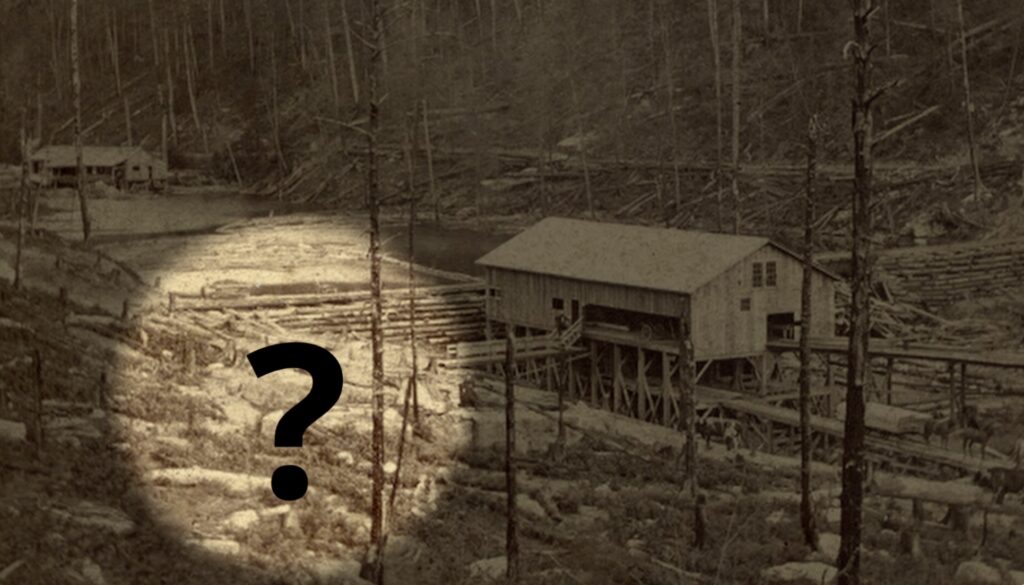
The History Center has produced a number of these small, local documentaries, including one that gives a tour of the area’s 13 historical markers, another on the history of Native Americans with a local authority on tribes in the region, and one on how local families experienced the Civil War. Another of the films, “Echoes of Iron – Unearthing a Blacksmith’s Legacy,” tells the story of a 20-year archaeology project in Clear Creek State Park in which the whole community was invited to participate. The film won two awards at the 2025 Arkhaois Virtual Film Festival: “Arkhaois Founder Award for Public Archaeology” in the feature films category and “Best PA Cultural Archaeology Short Film” in the Short Films category.
“We’ve got a rich history that’s just kind of overwhelming,” Lyons said. “People are able to see different industries, the different lives people led and why they led them.”
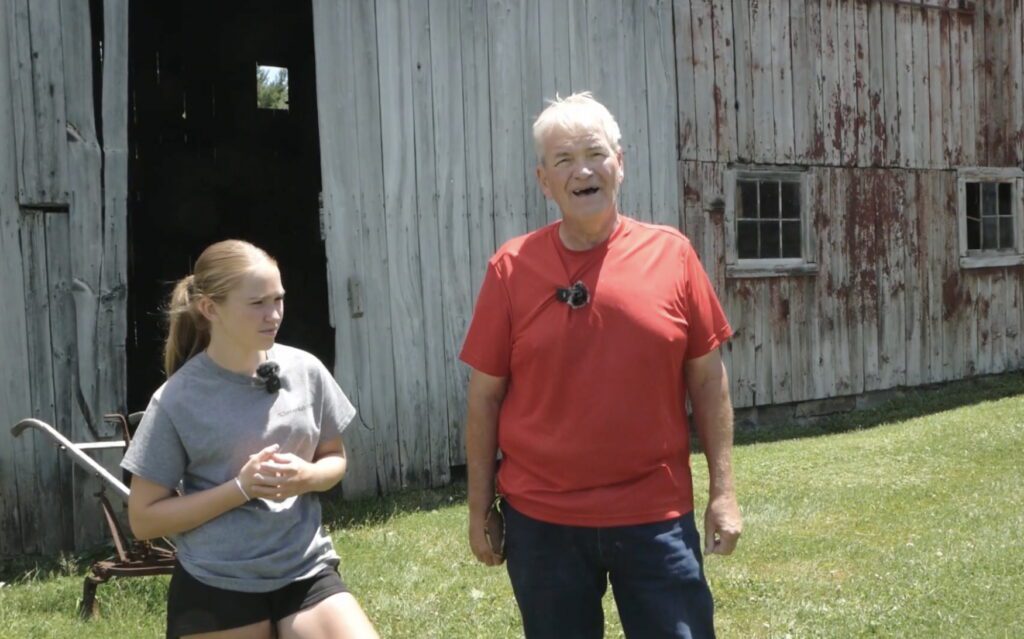
One of Lyons’ favorite films is “Harvest of Memories,” which tells the story of the region’s farms that have been in the same families for five and six generations.
“We filmed some very emotional stories at two of the century farms, including one where the grandfather broke down in tears and it was incredibly touching, to see his granddaughter there with him, continuing the tradition,” Lyons said. “Their stories about how they feel about their farms and talking about their ancestors and what the land means to them and what their lives mean to them, how they grew up, how they survived, it’s very emotional.”
Jefferson County History Center hopes to continue telling the stories of their region through film. Wade, too, hopes to keep up with filmmaking including an expansion on telling the stories of African American troops across the state. Like Lyons, he hopes to find funding to continue the work he developed through the Wingspan grant.
“(The PA Humanities grant) opened the door to do so many things,” Wade said. “If I don’t do another documentary I’ll always be grateful to PA Humanities.”

Funding for Wingspan has been provided by PA Humanities and Spring Point Partners, with additional support from private donors.
![[color - dark bg] PA SHARP FINAL FILES DB 72dpi](https://pahumanities.org/uploads/files/elementor/thumbs/color-dark-bg-PA-SHARP-FINAL-FILES-DB-72dpi-phgl7aimtfdpzt2rscvl43ksfv3asbbls19lsvuacw.jpg "[color – dark bg] PA SHARP FINAL FILES DB 72dpi")